-
7-minute read
-
9th October 2025
How to Find and Use Free Images for Commercial Use (Legally)
Every business needs compelling visual content for websites, social media profiles, and marketing materials. However, simply downloading images from search results can lead to serious legal trouble. Using copyrighted imagery without permission violates intellectual property law and can result in costly lawsuits.
Understanding image licensing doesn’t have to be complicated. This guide will show you how to navigate copyright laws and Creative Commons (CC) licensing to find legally safe images for commercial use. You’ll learn where to source professional-quality images without breaking the bank or risking legal issues.
Copyright and Your Legal Obligations
Copyright protection applies automatically to most creative works, including photographs, illustrations, and graphics. When someone creates an image, they become the copyright holder with exclusive rights to use, distribute, or modify that work.

This legal framework means you cannot use most images found online without explicit permission from the copyright owner. Violation of these rights constitutes copyright infringement, which can result in significant financial penalties. Some companies have faced lawsuits demanding thousands of dollars in damages for using just a single unauthorized image.
Following these two fundamental rules protects your business from copyright violations:
- Always assume images online are copyrighted unless clearly marked otherwise.
- Never use copyrighted images without obtaining proper permission or licensing.
Fortunately, alternatives exist that allow you to use high-quality images legally and often for free.
Public Domain vs. Creative Commons: Understanding Your Options
Two main categories of images offer legal alternatives to traditional copyrighted content: public domain images and CC-licensed works.
Public Domain Images
Public domain images have no copyright restrictions, which means you can use and modify them however you need – no payment or permission required. Images typically become publicly available when their copyright expires or when creators deliberately release their rights.
While public domain images offer maximum flexibility, you should still consider additional factors before using them. For example, images that feature recognizable people may require model releases for certain commercial uses, even if the photograph itself is in the public domain.
Creative Commons Licensed Images
CC provides a more nuanced approach to image licensing. This nonprofit organization created a standardized system that allows creators to grant specific permissions while retaining some rights to their work.
CC serves as a bridge between full copyright protection and complete public domain release. Instead of requiring creators to choose between all rights reserved or no rights reserved, CC licenses allow for Some Rights Reserved arrangements that benefit both creators and users.
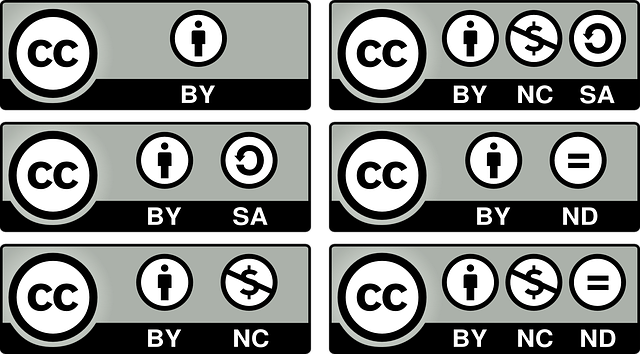
Decoding Creative Commons License Types
CC licenses combine four basic conditions that determine how you can use licensed content:
Attribution (BY) requires you to credit the original creator when you use their work. This credit should include the creator’s name, the work’s title, the license type, and any modifications you’ve made to the content. While you can seek permission to use attribution-required works without credit, the standard expectation is proper acknowledgment.
ShareAlike (SA) permits you to copy, distribute, display, and modify the licensed work, but it requires that any derivative works use the same license terms. This creates a “copyleft” effect that ensures modified versions remain freely available under similar conditions.
NonCommercial (NC) restricts use to noncommercial purposes only. This limitation is crucial for businesses to understand, as it prevents commercial use unless you obtain separate permission from the creator. Always verify whether NC restrictions apply before you use CC content for business purposes.
NoDerivatives (ND) prohibits modification or alteration of the original work. You can use these images as is, but you cannot edit, crop, incorporate them into new designs, or otherwise modify them without violating the license terms.
Find this useful?
Subscribe to our newsletter and get writing tips from our editors straight to your inbox.
Subscribe to Beyond the Margins and get your monthly fix of editorial strategy, workflow tips, and real-world examples from content leaders.
These four conditions combine to create six standard CC licenses:
- Attribution (CC BY): Maximum freedom with credit requirement only
- Attribution ShareAlike (CC BY-SA): Free use with credit and same-license sharing
- Attribution-NoDerivs (CC BY-ND): Free use with credit but no modifications allowed
- Attribution-NonCommercial (CC BY-NC): Free noncommercial use with credit
- Attribution-NonCommercial-ShareAlike (CC BY-NC-SA): Free noncommercial use with credit and same-license sharing
- Attribution-NonCommercial-NoDerivs (CC BY-NC-ND): Most restrictive; allows only unmodified noncommercial use with credit
For commercial applications, focus on licenses without the NC restriction. The CC BY license offers the most flexibility for business use since it requires only proper attribution.
Where To Find Free Images for Commercial Use
Several reliable sources provide access to legally usable images for commercial purposes.
Google Images With Advanced Filtering
Google Images remains the starting point for many image searches, but you must use the usage rights filter to find legally safe options. In the search results, select Tools, then Usage Rights, then Creative Commons licenses. This filter helps identify images with appropriate licensing, though you should always verify the specific license terms on the source website.
Dedicated Stock Photo Platforms
Pixabay offers an extensive database of public domain images, most of which are available for commercial use without attribution requirements. The platform includes photographs, illustrations, videos, and vector graphics contributed by a global community of creators.
Pexels and Unsplash provide similar services, with high-quality photographs released under generous licenses. These platforms have become popular among content marketers and web designers seeking professional-looking imagery.
Creative Commons Search Tools
CC Search functions as a specialized search engine for CC-licensed content across multiple platforms. This tool aggregates results from Flickr, Google, Wikipedia Commons, and other sources, which makes it easier to find appropriately licensed images and videos.
Flickr Advanced Search
While most Flickr images carry “All Rights Reserved” copyright protection, the platform’s Advanced Search feature includes license filtering options. This allows you to locate images with CC licenses, though you must carefully check each image’s specific license terms before use.
Government and Educational Resources
Many government agencies and educational institutions release images into the public domain or under permissive licenses. NASA, the Library of Congress, and various university collections provide excellent sources for specialized imagery.
Best Practices for Using Free Images Safely
Even when you use properly licensed images, following these best practices protects your business from potential issues.
Document your sources by maintaining records of when and where you obtained each image, including its URL, license terms, and the date you downloaded it. This documentation can help prove your due diligence if questions arise later.
Provide proper attribution when required by CC licenses. Include the creator’s name, image title, source URL, and license type. Many businesses include this information in image captions or footer credits.
Understand commercial use definitions, as they can vary. When in doubt, contact the creator directly for clarification about your intended use. Some creators interpret “commercial use” more broadly than others.
Respect derivative work restrictions by avoiding modifications to ND licensed content. This includes cropping, adjusting the color, editing, or incorporating images into larger designs unless explicitly permitted.
Integration With Your Content Strategy
Free images work best as part of a comprehensive content strategy that includes high-quality written content. Professional editing ensures your visual and textual elements work together effectively to communicate your message and maintain your brand’s credibility.
Whether you’re creating marketing materials or business documents, expert review makes your content more effective. Schedule a call today to discover how our business editing services can enhance your content strategy.